
Respond, Don’t React

Personal Growth · Emotional Intelligence
The quiet art of choosing your next move — and why the pause between stimulus and response is where your character lives.
Once, I was thinking — truly thinking, the kind of honest self-examination that arrives on a quiet afternoon — about how often I had been reacting to things rather than responding to them. I would react to a situation, a piece of news, a decision from my senior officer, a response from a client. Not a deliberate, considered reply — just a raw, immediate burst of energy released the moment pressure was applied. It was automatic. Reflexive. And more often than not, it was wrong.
What I didn’t realize then — and what took years of journal pages and hard workplace lessons to understand — is that there is a profound difference between these two tiny words. Reacting is the nervous system on autopilot. Responding is the conscious mind in the driver’s seat. One is driven by emotion; the other is guided by intention. And the distance between them, measured not in inches but in seconds and deep breaths, is where wisdom lives.
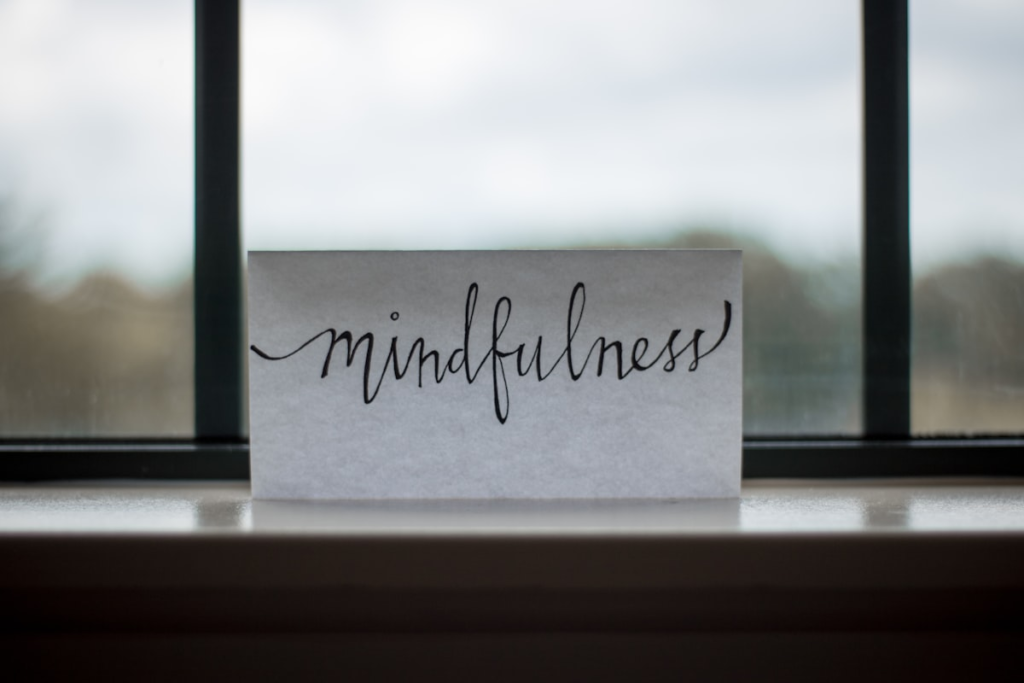
The art of the pause — choosing awareness over impulse
Between stimulus and response there is a space. In that space is our power to choose our response. In our response lies our growth and our freedom.
— Viktor E. Frankl, Man’s Search for Meaning
The Moment I Saw It Clearly
It was during one of the more frustrating weeks at work. A senior colleague had made a decision I disagreed with. A client engineer had responded in a way I found dismissive. Rather than sitting with those feelings — examining them, turning them over to understand what they were actually telling me — I reacted. I said something sharp. I pushed back in a meeting when it wasn’t the moment to push back. I argued not because I had a better solution, but because I hadn’t given myself time to find one.
The fallout wasn’t catastrophic. But it was costly in small, invisible ways — in the slight cooling of a relationship, in the energy wasted on a confrontation that resolved nothing, in the way I lay awake that night replaying the conversation and thinking: I should have just listened. I should have found my own way to respond to it.
Instead of reacting, I might have taken a different decision entirely. I might have moved ahead. I might have stopped arguing. Because here is the truth that took me far too long to accept: not winning an argument does not mean you are wrong. And there is no necessity — none — to win every argument. The better path, almost every time, is to keep it in the best way possible. To hold your ground internally while releasing the need to prove it externally.
you will never reach your destination if you stop and throw stones at every dog that barks.— Winston Churchill


WORKPLACE FRICTION IS THE GREATEST TRAINING GROUND FOR EMOTIONAL INTELLIGENCE
Reality Is the Best Tool for Letting Go
There is a phrase I came back to again and again in my journal: “Reality is the best tool for letting go — it takes far too long to reply to the other person virtually.” Responding is acting on what is good for us — not what feels satisfying in the immediate moment, but what actually serves the situation, the relationship, and our own integrity.
When we react, we are essentially time-traveling backward. We are pulling in old injuries, past humiliations, previous arguments with completely different people. The colleague who delivered the news you didn’t like today is absorbing the residue of every bad-news messenger who came before them. That’s not fair to them, and it certainly isn’t fair to you — because it means you are never actually dealing with what is in front of you. You are dealing with a ghost.
Responding, by contrast, demands that you stay in the present. It requires you to ask: What is actually happening here? What does this person actually need? What is the best version of what I can contribute to this moment? These are not soft questions. They are disciplined, even rigorous. They require that you set aside the lizard brain’s screaming need to be right, to be seen, to win — and choose instead to be useful.
The Responder’s Toolkit: Practices That Build the Pause
- Wait 24 hours before sending any message written in anger. Re-read it the next morning — you will almost always revise it or not send it at all.
- Ask yourself: “Is this mine to carry?” Often our reactions are triggered by things that are not actually about us.
- Name the emotion before you express it. “I feel dismissed” is information. A sharp retort is a detonation.
- Physical interrupt: stand up, drink water, step outside. The body and mind are one system — change the body’s state to change the mind’s trajectory.
- Replace “Why did they do this to me?” with “What is making them behave this way?” Curiosity dissolves hostility.
- Find another option before you fight for this one. If you redirect your energy to a second path, you may find it was always the better road.
The Colleague Who Couldn’t Hear Me
In one particularly memorable conversation with a colleague, I noticed something important mid-discussion. The other person simply was not able to understand the depth of the situation. They had forgotten what was decided earlier. They were giving vague, circling replies. And I felt the old pull — the urge to explain harder, to argue more convincingly, to force comprehension through sheer force of repetition.
Then a cleaner thought arrived: if this person isn’t understanding the depth of the situation, what exactly will I gain by continuing to argue with them? Nothing. Of course, nothing. I’d already been here before. I knew how it ended.
So instead, I thought: what is the best response here? And the answer, clear and quiet, was this — do not argue more. Do not explain more. Instead, respond by finding another solution. Redirect. Focus your energy on going to another option entirely. Focus on other opportunities.

JOURNALING BUILDS THE MENTAL GAP BETWEEN FEELING AND ACTING
The greatest victory is that which requires no battle.— Sun Tzu, The Art of War
What Neuroscience Tells Us
The distinction between reacting and responding isn’t just philosophical — it is neurological. When we perceive a threat (and the human brain categorizes social conflict as a threat just as readily as it categorizes physical danger), the amygdala fires first. It sends a full-body alarm — cortisol and adrenaline flood the system, vision narrows, the prefrontal cortex — the part of the brain responsible for nuanced judgment, empathy, and long-term thinking — gets partially offline.
This is what a reaction feels like from the inside: an urgent, certain, slightly electric impulse that something must be said or done right now. The certainty is the tell. Real wisdom is rarely that certain, that fast.
When we deliberately pause — even for a single slow breath — we give the prefrontal cortex time to come back online. We move from the amygdala’s binary world (threat/safety, win/lose) into the richer landscape of the thinking mind, where options multiply and context becomes available. This is the neuroscience of the pause. It is not a metaphor. It is biology.
Further Reading
Respond, Don’t React — Psychology Today
A clinical perspective on how emotional reactivity shapes relationships and how to cultivate a responding mindset.
Further Reading
How to Control Your Emotions During a Difficult Conversation — Harvard Business Review
Practical tools from leadership coaches on staying regulated under conversational pressure.
The Practice Is Never Finished
I want to be honest about something: I have not mastered this. There are still mornings when I send the email I shouldn’t have sent, when I say the sharp thing in the meeting, when I stay in an argument thirty seconds longer than wisdom dictated. The gap between knowing a thing and living a thing is one of the most humbling distances a person can travel.
But what has changed is the interval between the reaction and the recognition. Where it used to take days to understand what went wrong, it now takes hours. Where it took hours, it sometimes takes minutes. And occasionally — gloriously, on the best days — the recognition arrives in time to make a different choice. To respond instead of react. To stay quiet when quiet is the right answer. To find the other option. To focus on another opportunity.

EVERY DIFFICULT MOMENT IS AN INVITATION TO CHOOSE WHO YOU WANT TO BE
There is a quiet dignity in it. Not the drama of the perfectly delivered comeback, not the temporary satisfaction of winning a point — but something deeper and more durable: the knowledge that you met a difficult moment with the best version of yourself available. That you acted from values rather than from wounds. That you gave the situation what it needed rather than what it triggered in you.
It is not what happens to you, but how you react to it that matters.— Epictetus
A Final Thought
Responding, rather than reacting, is ultimately an act of self-respect. It says: I am more than my impulses. I am more than my first feeling. I have the capacity to pause, to consider, to choose. And in that choosing — made again and again, imperfectly, across the small and large moments of a life — we become the kind of person whose presence actually steadies a room rather than heating it up.
The next time a difficult message arrives, a challenging person appears across a conference table, or a situation unfolds that pushes on every raw edge you have — try this: don’t answer yet. Don’t type yet. Don’t speak yet. Take one breath that belongs entirely to you. Ask what the best version of your response looks like. And then give the world that — not your wounds, not your history, not your adrenaline.
Give them your response. The one you’ll be proud of tomorrow.
Responding is acting on what is good for us. Reacting is surrendering that choice to whatever pushed us last. The space between the two is not emptiness — it is everything.