Swatantrya Veer Savarkar: A Cinematic Revelation That Defies Modern Standards

Swatantrya Veer Savarkar: A Cinematic Revelation That Defies Modern Standards Every once in a while, a piece of cinema emerges that completely shatters expectations, forcing the audience to rethink their assumptions about modern filmmaking. Swatantrya Veer Savarkar (SVS) is precisely that rare phenomenon. To put it simply and definitively: What a great movie. It stands out as an extraordinary, monumental achievement in biographical cinema, presenting a raw and unfiltered perspective that challenges long-standing historical narratives.
A Rare Gem from an Unexpected Source
To truly appreciate the magnitude of this film, one must examine it against the backdrop of the industry from which it came. Modern Bollywood has earned a pervasive reputation for producing what can only be described as garbage and stupid movies. For years, audiences have been subjected to repetitive, uninspired, and structurally weak cinema that prioritizes superficial entertainment over intellectual substance, deep philosophy, or historical accuracy.
Because of this track record, walking into the theater to watch a cinematic masterclass like SVS comes with a profound sense of disbelief. It is an experience so shocking and refined that many viewers will find themselves struggling to accept the fact that this movie was actually created within the confines of Bollywood. The sheer depth of research, the boldness of execution, and the uncompromising cinematic vision feel entirely alien to standard industry practices. SVS breaks away from standard tropes, delivering an authentic, intense experience that treats its subject and its audience with the ultimate seriousness.
The Unveiling of Hindutva Philosophy
At the absolute core of this biographical masterpiece is an exploration of the Hindutva philosophy. Rather than diluting or shying away from ideological complexities to appease mainstream sensibilities, the film tackles this foundational framework head-on. It provides a rare and clear-eyed cinematic window into how this philosophy was shaped, conceptualized, and articulated during a tumultuous period of national awakening.
By integrating the ideological evolution naturally into the narrative fabric, the film allows the audience to understand the intellectual paradigm that drove the revolutionary movement. It presents the philosophy not merely as an abstract political theory, but as an active, lived response to colonial subjugation. This focus gives the film a profound intellectual weight, distinguishing it from typical historical dramas that strip away complex political philosophies in favor of generic storylines.
“The film captures a profound sense of ideological conviction, presenting an uncompromising look at the intellectual foundations of a revolution.”
A Portrait of Character: Courage, Patience and Power
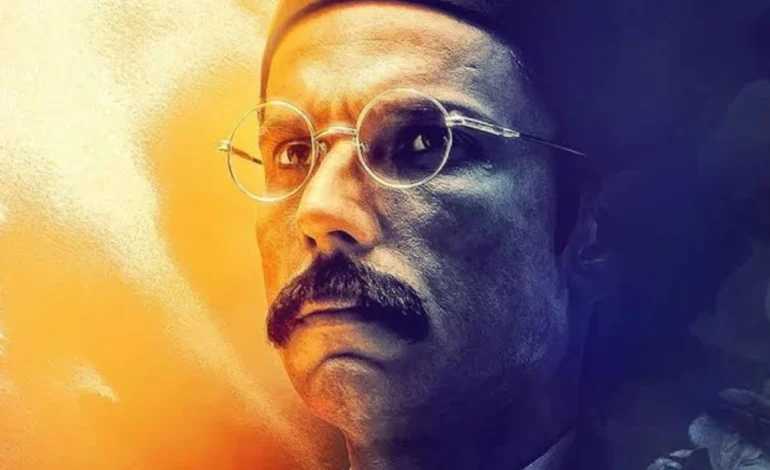
Beyond the overarching political and philosophical themes, the movie succeeds marvelously as an intimate character study. It brings to life the extraordinary courage, immense patience, and ultimate internal power of Vinayak Damodar Savarkar. The narrative skillfully conveys the sheer scale of the challenges he faced, illustrating that his journey was not just one of political resistance, but of intense personal endurance.
The film meticulously balances these three traits to show how they fed into one another. His courage was not merely a flash of momentary bravery, but a sustained, deep-seated conviction that withstood the most brutal forms of imprisonment and isolation. This was paired with a legendary patience—a strategic endurance that allowed him to play the long game against an oppressive empire. Ultimately, the film showcases his power, which was rooted not in physical dominance, but in an unyielding intellect and an iron will that inspired an entire generation of revolutionaries to rise.
Unveiling Real History and Unsung Sacrifices
One of the most valuable aspects of Swatantrya Veer Savarkar is its dedication to presenting real history and a meticulous series of events. Historical cinema often suffers from oversimplification, where complex timelines are condensed into convenient, fictionalized summaries. This film rejects that approach, choosing instead to guide the viewer through an intricate, authentic sequence of historical milestones that defined the struggle for independence.
In doing so, the movie performs an essential service to the nation’s memory by highlighting the real sacrifices made by a vast network of individuals whose names we don’t even know today. While mainstream textbooks have compressed the independence narrative to focus almost exclusively on a handful of figures, SVS fills the void with the stories of forgotten martyrs, regional leaders, and underground revolutionaries. Seeing these unsung heroes brought to light reminds the audience of the immense cost of freedom, demonstrating that independence was won through a tapestry of sacrifices across the nation.
The Stark Ideological Contrast: Gandhi and Savarkar
A definitive highlight of the film is its willingness to address the profound ideological differences between Mahatma Gandhi and Veer Savarkar. The movie does not obscure or soften this friction; instead, the Gandhi and Savarkar difference is shown clearly and uncompromisingly. This contrast forms the intellectual backbone of the second half of the movie, illustrating two fundamentally opposing visions for India’s freedom struggle and its identity.
Through sharply written dialogue and historically grounded encounters, the film contrasts Gandhi’s philosophy of absolute non-violence and compromise against Savarkar’s pragmatic, revolutionary, and heavily armed resistance framework. By laying out these differences with absolute clarity, the film allows the audience to see the genuine intellectual debates that divided the independence movement, providing much-needed nuance to an era that is too often romanticized as uniform and singular in its approach.
Exposing Historical Hypocrisy and the Status of Congress
Finally, the film takes a bold and critical step by turning its lens onto the political establishment of the era. A central narrative thread focuses on exposing historical hypocrisy and shedding light on the early operations and political calculations of the Indian National Congress. The status of Congress is exposed through a critical depiction of its administrative decisions, political compromises, and its treatment of radical revolutionaries.
The movie systematically deconstructs the post-independence narrative that often cast the political elite as the sole architects of India’s freedom. By showing how the institutional hierarchy repeatedly sidelined, dismissed, or actively suppressed more radical voices, the film provides a sharp critique of historical gatekeeping. This perspective challenges viewers to look beyond polished political myths and confront the uncomfortable realities of how power was negotiated, distributed, and maintained during the transition to independence.
Conclusion: A Necessary Visual Chronicle
In conclusion, Swatantrya Veer Savarkar is much more than a standard biographical feature; it is an essential piece of revisionist historical cinema. By stepping completely outside of the typical, low-quality formulas that plague mainstream commercial cinema, it delivers a powerful, intellectually rigorous, and visually striking narrative.
From its unfiltered exploration of Hindutva philosophy to its honest depiction of unsung sacrifices, its clear demonstration of the Gandhi-Savarkar divide, and its exposure of institutional hypocrisy, SVS demands to be watched. It stands as a profound testament to what cinema can achieve when it abandons generic patterns and embraces the raw, unvarnished truth of history.