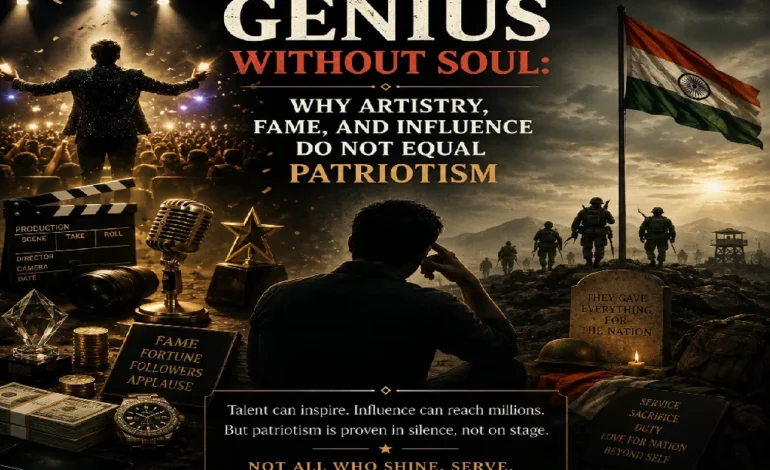
Genius Without Soul: Why Artistry, Fame, and Influence Do Not Equal Patriotism

The Illusion of the Idols
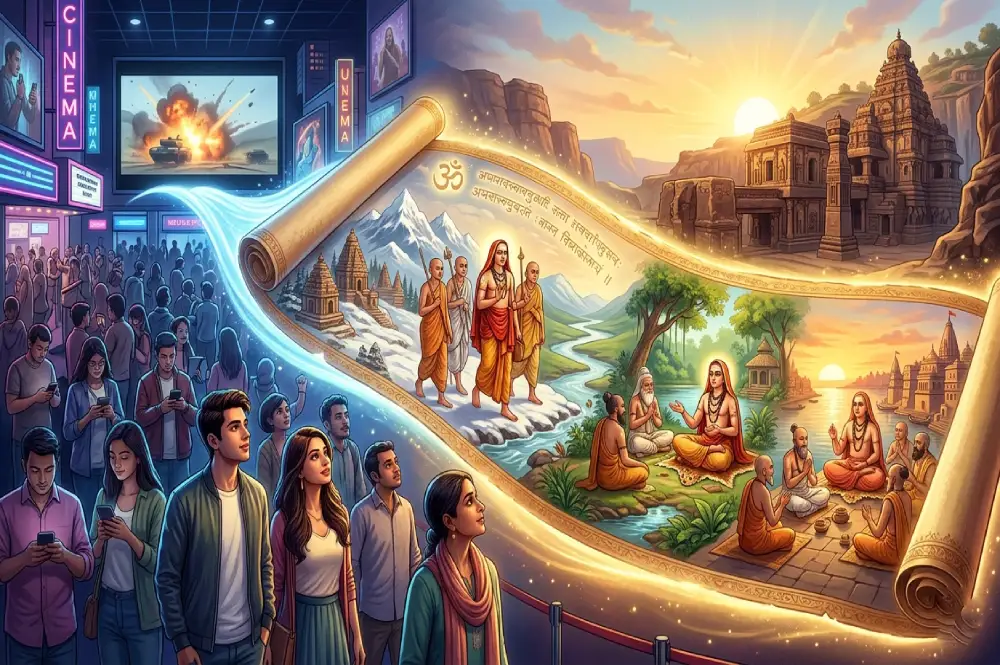
We live in an era dominated by the cult of personality. Whether through the glittering lights of cinema, the deafening applause of stadium concerts, the viral reach of social media influencers, or the exalted status of tech innovators, society has developed a dangerous habit: conflating exceptional talent with moral authority. We routinely assume that because someone can paint a masterpiece, direct a blockbusting film, hit a century on a cricket pitch, or build a billion-dollar platform, they must also possess a noble heart, a love for their motherland, and an innate sense of ethical responsibility.
Yet, history and contemporary reality tell a starkly different story.
Great talent is simply a tool. It can elevate a culture, or it can erode it from within. Being an artist, a creative genius, or a cultural icon does not automatically make someone a nationalist, a patriot, or a guardian of society. You can be an undisputed master of your craft while simultaneously inflicting deep damage on your country’s pride, cultural heritage, and social cohesion.
It is time to dismantle the blind worship of status and look deeper—into the thought processes, deeds, and true motivations that lie beneath the public facade.
1. The Separation of Talent and Character
The fundamental error of modern public discourse is confusing capacity with character.
Skill / Fame / Genius ≠ Moral Integrity / Patriotism / Selflessness
An artist may possess a sublime aesthetic vision; an innovator may re-engineer entire industries; an entertainer may command millions of devoted followers. But these achievements belong to the domain of skill and intellect—not character.
Talent as a Double-Edged Sword
Consider how creative power operates in the real world:
- The Creative Disruptor: An artist can use their platform to celebrate heritage, unify diverse populations, and inspire national resilience.
- The Opportunistic Subversive: Alternatively, the exact same creative skill can be used to mock native traditions, divide communities along ideological fault lines, and sell a country’s cultural pride for global applause or commercial gain.
When we uncritically chase celebrities and elevate them as national conscience-keepers, we forget a fundamental truth: many are simply opportunists. Their primary allegiance is often not to the nation, its people, or truth itself, but to personal fame, financial wealth, and political expediency.
“To evaluate a person based solely on what they have achieved or what they have given outwardly is dangerously incomplete. True assessment requires understanding what resides inside their mind and what drives their actions.”
2. The Metaphor of Ravana: Devotion and Genius Without Dharma
To understand why extraordinary capability cannot absolve harmful deeds, one need look no further than ancient wisdom.
In the Ramayana, Ravana was not a caricature of simple ignorance. On the contrary, he was a figure of immense erudition, unmatched intellect, and extraordinary devotion.
- He was a master of the four Vedas and the six Shastras.
- He was an accomplished musician who created the Ravanahatha and composed the Shiva Tandava Stotram.
- He was a scholar whose astrological and administrative knowledge was legendary.
- He was among the greatest devotees of Lord Shiva, performing austerities that awed the heavens.
| Trait | Ravana’s Reality | The Ethical Reality |
| Intellect & Knowledge | Master of scriptures and arts | Knowledge without humility leads to arrogance |
| Devotion & Discipline | Unmatched penance to Lord Shiva | Devotion without righteousness (Dharma) is hollow |
| Actions & Deeds | Abduction, tyranny, egoism | Destructive deeds demand accountability |
Despite his immense learning, unparalleled devotion, and artistic mastery, Ravana was ultimately brought down and slain by Shri Ram. Why? Because his deeds (karmas) and inner intent were driven by ego, transgression, and disregard for ethical righteousness (Dharma). His genius could not shield him from the consequences of his actions.
The lesson is timeless: No amount of talent, knowledge, or past devotion compensates for destructive deeds. If a genius uses their gift to tear down the fabric of society, their genius becomes an engine of destruction rather than a blessing.
3. The Modern Crisis: Opportunism and Performative Activism
If we observe the global landscape—and particularly the socio-cultural environment in India—the phenomenon of celebrity hypocrisy has reached unprecedented levels. Modern public figures have mastered the art of narrative manipulation, presenting themselves as champions of progress while operating out of pure self-interest.
The Dynamics of Selective Outrage
One of the clearest symptoms of this opportunism is selective outrage. Celebrities and high-profile artists frequently jump on global social trends to curry favor with international networks, earn “woke” cultural capital, or secure lucrative brand deals, while remaining conspicuously silent on severe issues in their own backyard.
Global Fashionable Trend ──► Instant Hashtag & Solidarity (Clout Gained)
Local Cultural Crisis ──► Convenient Silence / Equivocation (Risk Avoided)
Consider the contrast:
- The Western Validation Chaser: When a social justice movement trends in Western nations, local elites rush to publish heartfelt statements, adopting foreign slogans to align with global coastal media circles.
- The Domestic Bystander: Yet, when violence, injustice, or cultural desecration occurs within their own country—often against traditional communities or indigenous institutions—these same figures remain silent or actively shift blame onto the victims to protect their commercial interests.
This is not principled stance-taking; it is commercial calculation masquerading as moral superiority.
The Business of Cultural Degradation
In cinema, literature, and digital media, a subtle form of cultural erosion has taken root. To appear “edgy” or appealing to foreign festivals and funding bodies, a section of artists consistently depicts their own nation’s heritage, festivals, and spiritual traditions in a cynical, retrograde light.
They sell a narrative of national shame to global buyers while reaping the financial rewards of the domestic market they diminish. This is precisely what happens when we mistake artistic output for national duty: we empower opportunists who profit by devaluing the very culture that nurtured them.
4. Dissecting Narratives: Facts and Reasoning vs. Emotional Appeals
Everyone today has a “narrative.” Influencers spin narratives to build brands; commentators spin narratives to gain clicks; artists spin narratives to frame their personal ideologies as universal truths.
However, a narrative is not inherently true simply because it is delivered with eloquence, artistic flair, or high production value.
EMOTIONAL NARRATIVE CRITICAL ANALYSIS
┌───────────────────────┐ ┌───────────────────────┐
│ • Celebrity Status │ │ • Verified Facts │
│ • Eloquent Speeches │ vs │ • Logical Consistency │
│ • Aesthetic Appeal │ │ • Inner Intent │
│ • Selective Outrage │ │ • Tangible Deeds │
└───────────────────────┘ └───────────────────────┘
To break free from idol worship and emotional manipulation, citizens must evaluate public figures through a framework of facts, logical reasoning, and intent analysis.
Key Questions to Ask When Assessing Any Public Figure:
- What are the verifiable facts behind their statements? Does their claim rest on empirical evidence and historical reality, or is it an emotional appeal designed to polarize?
- Is there logical consistency across time? Do they hold all parties to the same standard, or do their moral positions shift depending on who is paying them, who is in power, or what topic is trending?
- What is their underlying thought process? Is their critique constructive—aimed at reforming and strengthening the country—or is it destructive, aimed at dismantling core national pride and identity?
- Who benefits from their narrative? Does their stance serve the genuine interests of the nation and its citizens, or does it serve foreign geopolitical interests, corporate sponsors, and personal brand building?
5. Global Hypocrisy and the Indian Reality
This problem is not unique to India, but its impact in India is particularly acute due to the country’s rapid economic rise, rich ancient heritage, and ongoing cultural renaissance.
The Global Phenomenon
Around the world, we see Hollywood actors, elite athletes, and tech moguls preaching environmental sacrifice while flying in private jets, or lecturing the public on human rights while doing business with authoritarian regimes. The global influencer economy has decoupled words from consequences.
The Indian Context
In India, the legacy of colonial conditioning created an environment where elite cultural figures often felt that insulting indigenous traditions was a mark of sophistication. For decades:
- Mainstream media and cinema routinely stereotyped native spiritual practices while romanticizing foreign ideologies.
- Prominent intellectuals used academic platforms to diminish India’s civilizational achievements under the guise of “rationalism.”
- Celebrities lectured citizens on how to celebrate native festivals while staying silent on non-native environmental degradation.
This dual standard created a deep sense of cynicism among general citizens. The public is increasingly recognizing that a vast gap exists between what these figures preach on screen and how they act in reality.
6. Redefining Genuine Patriotism and True Contribution
If artists and celebrities are not inherently nationalistic or moral anchors, how should we understand true patriotism in a modern nation?
Patriotism is not about blind approval of everything, nor is it about loud posturing. True nationalism is a commitment to the well-being, integrity, sovereignty, and dignity of one’s nation and culture.
FALSE PATRIOTISM / HERO WORSHIP | GENUINE CITIZENSHIP
────────────────────────────────────────────────────┼────────────────────────────────────────────
• Blindly worshipping celebrities and influencers │ • Evaluating actions based on objective facts
• Conflating fame with moral authority │ • Valuing silent, real-world service
• Accepting slick emotional narratives │ • Scrutinizing intent and consistency
• Supporting opportunists who mock heritage │ • Protecting and preserving cultural pride
The Unsung Heroes
The true foundations of a nation are rarely built by those under the spotlight. They are built by:
- The Soldiers: Standing guard at extreme altitudes, sacrificing personal comfort and life for territorial integrity.
- The Scientists and Engineers: Quietly developing indigenous technologies, space missions, and infrastructure without seeking celebrity clout.
- The Teachers and Scholars: Preserving authentic history, indigenous languages, and values for the next generation.
- The Grassroots Creators: Local artisans, weavers, and folk artists who preserve sacred art forms out of genuine love for the craft and tradition, rather than foreign accolades.
These individuals may not have millions of digital followers or walk red carpets, but their deeds directly sustain the pride and vitality of the nation.
7. Conclusion: Developing a Critical and Self-Reliant Mindset
The message conveyed in the original note serves as a crucial wake-up call for modern society:
We must stop worshipping talent in isolation from character, intent, and deeds.
An artist can be brilliant and yet be an opportunist who damages their own country. An innovator can be a genius and yet operate without a moral compass. Just as Ravana’s unmatched devotion and intellect could not redeem his destructive actions, no amount of fame, awards, or aesthetic mastery can excuse those who undermine their nation’s pride and harmony.
As readers, citizens, and consumers of culture, our responsibility is clear:
- Dismantle Idol Worship: Enjoy art, respect skill, and appreciate innovation, but do not surrender your moral judgment to the people who create them.
- Demand Consistency and Facts: Reject selective outrage and slickly produced narratives. Demand objective facts, sound reasoning, and long-term ethical consistency.
- Look Inside the Mind: Judge public figures not by their staged public appearances, but by their underlying thought processes and the tangible impact of their actions on society.
By replacing blind celebrity fascination with sharp critical thinking, we protect our culture, honor genuine contributors, and build a nation rooted in truth, reasoning, and self-respect.