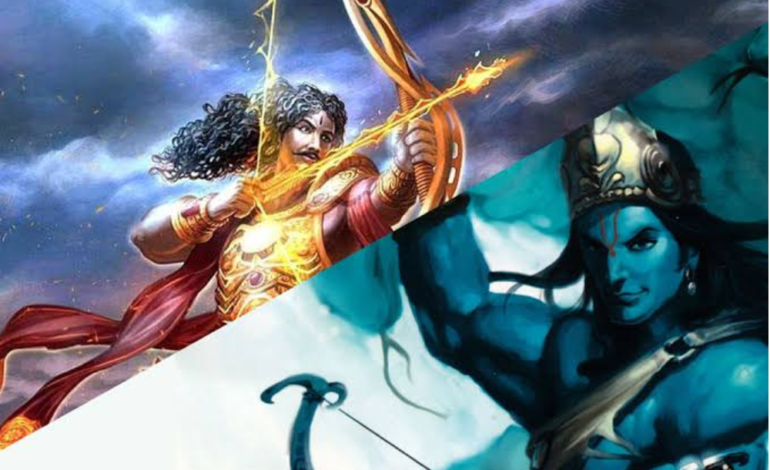
What Is True Friendship? A Mahabharata Perspective On Krishna Vs. Karna

We’ve all seen that viral WhatsApp forward or social media post—the one that waxes eloquent about friendship, claiming that a friend should either be like Krishna or like Karna.
The logic of the post usually goes like this:
Be like Krishna: Because He will stand by you till the very end and ensure your victory, guiding you through every crisis.
Be like Karna: Because even when he knows you are wrong, and even when he knows you are destined to lose, he will still sacrifice his life to stand by you.
At first glance, it sounds incredibly poetic and deeply loyal. It pulls at our heartstrings. But if we pause, step back, and look deeper into the actual philosophy of the Mahabharata, we realize that this popular perspective is fundamentally flawed. In fact, it promotes a dangerous idea of what a friend should be.
Let’s unpack why the “Karna model” of friendship is actually toxic, and why true friendship—the kind we desperately need in modern life—is epitomized solely by Sri Krishna.
The Romanticism of Karna: Hero or Enabler?
In modern pop culture, television adaptations, and fiction, Karna has been heavily romanticized. He is often portrayed as the ultimate tragic hero—a man wronged by society, cast aside by his mother, and denied his rightful status. Consequently, when Duryodhana offers him respect and a kingdom, Karna’s absolute loyalty to him is seen as the pinnacle of friendship.
But we must ask ourselves a difficult question: Is a friend who blindly supports your downfall actually a friend?
The Episode of the Gambling Match and Draupadi’s Humiliation
If we look at the actual episodes of the Mahabharata, Karna was not just a passive bystander to Duryodhana’s evil; he was often an active instigator. During the infamous dice game, when Yudhisthira lost everything, it was Karna who insulted the Pandavas, calling them propertyless servants. Worse, it was Karna who explicitly suggested that Draupadi be dragged into the assembly and publicly humiliated, calling her an unchaste woman because she was married to five men.
A true friend acts as a mirror. When Duryodhana was consumed by jealousy and hatred, a real friend would have grabbed him by the shoulders, looked him in the eye, and said, “This is wrong. Dragging a queen into court and attempting to disrobe her is an unforgivable sin, and I will not support you in this.” Instead, Karna enabled Duryodhana’s worst impulses.
The Toxic Loop of “Loyalty”
By constantly validating Duryodhana’s malice, Karna gave him the confidence to reject every peace treaty. If Karna had refused to fight an unjust war, Duryodhana might have backed down, saving his own life, the lives of his brothers, and the entire Kuru clan.
Instead, Karna’s definition of friendship was based on a transactional sense of debt. Because Duryodhana gave him a kingdom, Karna sacrificed his conscience. In doing so, he ensured his own destruction and dragged Duryodhana right down to hell with him. That isn’t friendship; that is a mutual destruction pact.
The Krishna Model: The Courage to Correct
Now, let’s look at Sri Krishna. His friendship with Arjuna is the gold standard because it was built on truth, accountability, and spiritual growth.
Krishna did not simply nod along to whatever Arjuna wanted. In fact, the most famous dialogue in human history—the Bhagavad Gita—happened precisely because Krishna refused to let Arjuna make a massive mistake based on temporary emotional delusion.
True Friendship Model
| Sri Krishna | Karna |
| Acts as a mirror | Acts as an enabler |
| Corrects your mistakes | Validates your vices |
| Saves you from your ego | Fuels your destruction |
| Guides you toward Dharma | Sacrifices conscience for loyalty |
The Episode of the Kurukshetra Battlefield
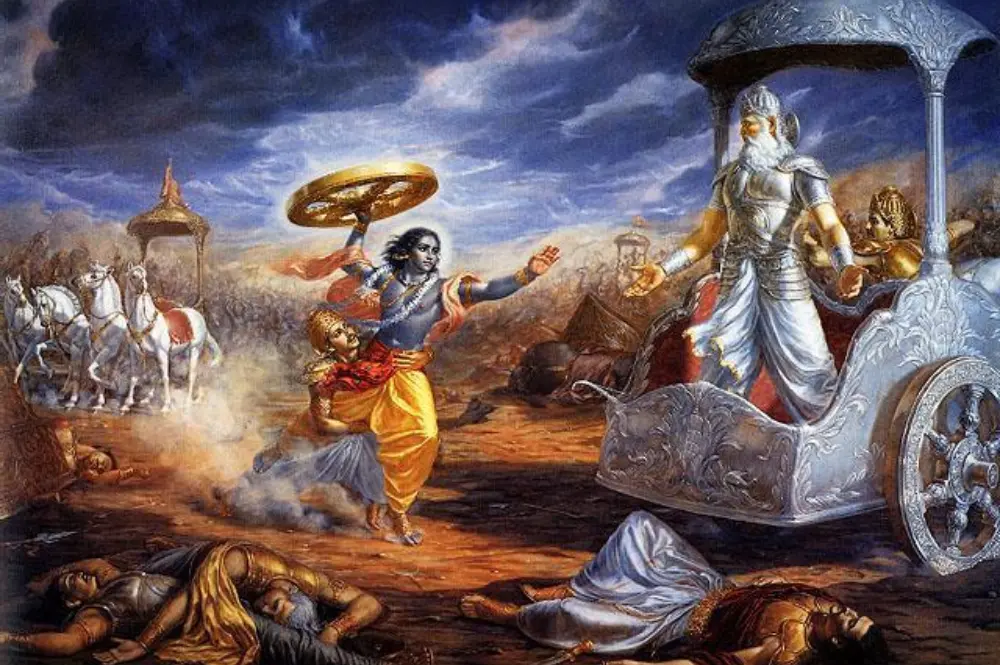
On the morning of the war, Arjuna is overwhelmed by grief and anxiety. Seeing his grandfathers, teachers, and cousins across the battlefield, he drops his bow, Gandiva, and says, “I will not fight. It is better to beg than to kill my own kinsmen.”
If Krishna followed the modern, casual definition of friendship, He might have said, “I understand, buddy. Let’s pack up, go back, and find another way. I support whatever makes you comfortable.” But Krishna didn’t do that. He severely rebuked Arjuna, calling his sudden weakness unmanly and un-Aryan (Anarya-jushtam). Krishna spent the next few hours breaking down Arjuna’s ego, shattering his illusions, and explaining the cosmic nature of duty and Dharma. He didn’t care about making Arjuna feel good in the moment; He cared about Arjuna doing what was right for his soul and for the world.
Krishna’s Endless Commitment
True friendship doesn’t mean you give advice once and then walk away, saying, “Well, I told them, it’s their life.” Krishna didn’t just deliver the Gita and leave the chariot. He stayed. He drove the chariot through the arrows, protected Arjuna from the deadly Brahmastra, shielded him from Karna’s Nagastra, and literally acted as his armor throughout the eighteen days of horror. Even when Arjuna made tactical errors, Krishna was there to catch him, guide him, and anchor him.
Modern Friendship: We are Choosing Karnas when We Need Krishnas
In today’s world, our definition of friendship has become incredibly shallow. We live in an era of “validation culture.” We want friends who comment “Queen!” or “King!” on our social media posts, who take our side in every argument regardless of who is right, and who join us in bad habits.
If you are destroying your career, spending money recklessly, treating people poorly, or stuck in a toxic mindset, a “Karna-type” friend will sit next to you, pour you another drink, and say, “The world is unfair to you, bro. You are right, they are wrong.” They validate your victim mentality.
But a “Krishna-type” friend is rare and uncomfortable.
They will call you out when you are being arrogant.
They will tell you when you are mismanaging your life.
They will not let you settle for a lesser version of yourself.
They will have the uncomfortable conversation because they love you enough to risk your temporary anger for your long-term well-being.
Conclusion: Reframing the Narrative
The next time you see that WhatsApp message romanticizing Karna’s loyalty, remember the heavy price of that loyalty. Karna’s friendship with Duryodhana resulted in the extinction of an entire dynasty. Krishna’s friendship with Arjuna resulted in the re-establishment of righteousness on Earth. We must stop glorifying blind loyalty that leads to ruin. True friendship is not about going down in flames together just to prove a point. True friendship is about pulling each other out of the fire, reminding each other of our highest potential, and standing shoulder-to-shoulder on the path of truth. Be a Krishna to someone today. And if you have a Krishna in your life who has the courage to tell you the hard truths—never let them go.