Auditing: The Art Of Showing The Mirror

How technical auditors hold up a reflection — and why organisations react, not respond
[ 📷 Auditor reviewing documents at a construction or industrial project site ]
A technical auditor at work — reviewing systems for conformance and effectiveness.
There is a particular kind of courage required to hold up a mirror in front of an organisation and say: look at yourself. Not with malice. Not with judgement. Simply — look. This is precisely what a skilled technical auditor does, and it is far more uncomfortable for the audience than it sounds.
As a technical auditor at construction projects, the role takes you into the heart of organisations during their most vulnerable operational moments. You sit in pre-construction conferences, walk project sites, observe teams in motion, check systems for conformance and effectiveness. You are not there to win friends. You are there to reflect reality.
“The first responsibility of a leader is to define reality.”
— Max De Pree, Leadership is an Art
The Two Kinds of Parameters
Every organisation operates within parameters — but not all parameters are the same. There are written parameters: the policies, procedures, ISO standards, contractual obligations, and safety codes documented in manuals that sit on shelves or live in shared drives. These are easy to audit. You check, you compare, you mark conformance or non-conformance.
Then there are the unwritten parameters — and these are the ones that truly define an organisation. These are the standards embedded in the collective memory of people over years. They live in habits, in unspoken shortcuts, in the way a foreman corrects a new worker without reference to any manual. They are made in the minds of people across years of practice, and somewhere along the way, the people who carry them began to believe they are eternal truths.
This is where auditing becomes genuinely difficult — and genuinely important.
“We cannot solve our problems with the same thinking we used when we created them.”
— Albert Einstein
[ 📷 Team meeting in a corporate boardroom — informal norms being reinforced ]
Unwritten rules and ingrained habits are often the real standards that govern an organisation.
The Frozen Mind and the Threatened Ego
Here is what typically happens when an external auditor walks into an organisation that has been doing things “their way” for years: the defensive walls go up. You can almost see it — a subtle stiffening, a narrowing of eyes, a readiness to explain rather than listen.
Their tagline is always some version of: “At all the places we are, we do it with this standard. Everywhere it is done in this way only.” The problem with this framing is that it mistakes familiarity for correctness, and longevity for validity. The fact that something has been done a certain way for a long time does not make it right — it merely makes it comfortable.
Any opposition to the parameters an auditor presents is almost instantly attributed to something personal: the auditor’s stubbornness, their inexperience with “how things really work,” their failure to understand the company’s unique context. They cite stifled thoughts and suppressed urges. They cite egos. The question they cannot stop themselves from asking, internally if not aloud, is: how can somebody from outside the company tell us what to do?
“It is not the strongest of the species that survive, nor the most intelligent, but the one most responsive to change.”
— Often attributed to Charles Darwin
The Mirror Moment
And yet — something extraordinary happens when you show people the right image of themselves.
The main problem is not that these organisations are bad, or that their people are incompetent. The main problem is that they stopped thinking in an open way. Knowingly or unknowingly, they stopped asking whether their standard is still the right standard. They stopped being curious. The mental door closed gradually, without anyone noticing, one comfortable habit at a time.
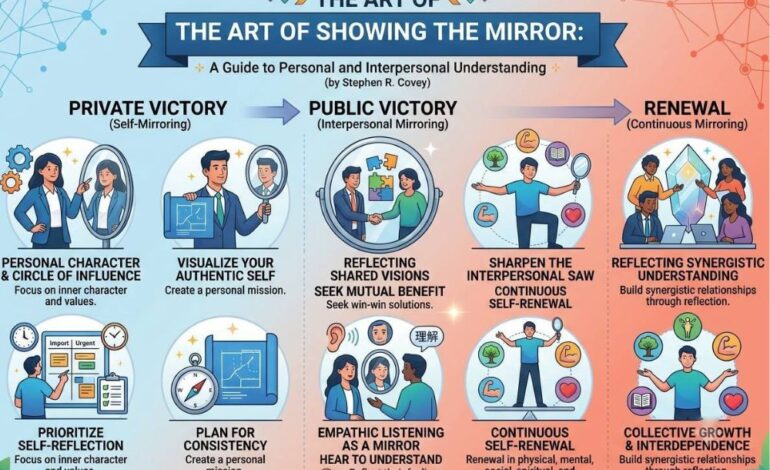
As an auditor, when you show them the mirror — when you present the gap between what they believe they are doing and what is actually happening — something interesting occurs. They start reacting. Not responding: reacting. There is an important difference. A response is considered, measured, constructive. A reaction is immediate, emotional, protective.
The reaction itself is data. It tells you how deeply the unwritten parameter is embedded. The stronger the reaction, the more important the finding. And the auditor’s job, in that moment, is to remain calm, to stay with the mirror, and to not let the heat of the reaction cause them to put it down.
[ 📷 Professional facing their reflection — metaphor for organisational self-awareness ]
The mirror moment — when an auditor’s findings prompt a reaction rather than a response.
“Feedback is the breakfast of champions.”
— Ken Blanchard
Why This Matters Beyond the Audit Room
The dynamics described here are not unique to construction audits. They play out in every industry, every boardroom, every performance review. The pattern is the same: an established group, confident in their accumulated knowledge, encounters an outsider who has the audacity to suggest that things could be done differently — or better.
What makes auditing valuable is precisely what makes it uncomfortable: it introduces the perspective of a fresh eye. The auditor has no emotional investment in the current system. They have not spent years defending a particular way of doing things. They are, in the truest sense, looking at the mirror rather than into it.
Peter Senge, in The Fifth Discipline, describes one of the most important capabilities an organisation can develop: the ability to see its own mental models clearly, to examine the assumptions beneath its actions, and to remain genuinely open to learning. He calls it “seeing the water we swim in.” Most fish cannot do it. The auditor can.
“The ability to learn faster than your competitors may be the only sustainable competitive advantage.”
— Arie de Geus, The Living Company
What It Takes to Hold the Mirror Steady
Being an effective auditor — one who truly shows the mirror rather than merely filing a report — requires a rare combination of technical competence and personal groundedness. The technical competence is necessary to establish credibility; without it, no one will look at the mirror you are holding. But it is the personal groundedness that allows you to hold it steady when the reaction comes.
You must be clear in your own mind that your role is not to judge the people in front of you, but to serve the organisation’s long-term interests — even when those interests conflict with what the organisation currently believes about itself. You must be able to distinguish between a person defending their work and a person genuinely open to examining it. And you must never mistake the heat of the reaction for the end of the conversation.
The most important audits are not the ones where everything is in order. They are the ones where something significant is wrong — and the auditor, faced with resistance, discomfort, and ego, continues to hold the mirror steady until someone, finally, truly looks.
Conclusion: The Courage of Reflection
Auditing, at its finest, is an act of courage — both for the auditor and for the organisation willing to genuinely engage with the findings. The mirror is only useful if someone is willing to look into it honestly. And the auditor’s greatest professional satisfaction is not in writing the non-conformance — it is in watching the moment when the reaction transforms into reflection, and reflection transforms into change.
Because that is the whole point. Not the audit. The change.
Further Reading & References
International audit and quality management standard: ISO 9001:2015 Quality Management Systems
Foundational text on organisational learning and mental models: The Fifth Discipline — Peter Senge
Classic work on defining reality and servant leadership: Leadership is an Art — Max De Pree
Global professional body for internal auditing standards and resources: Institute of Internal Auditors (IIA)
Articles on auditing, feedback, and organisational improvement: Harvard Business Review: The Art of the Constructive Audit