The AI Threshold: Are We Mentally Ready for the Machines We Built?

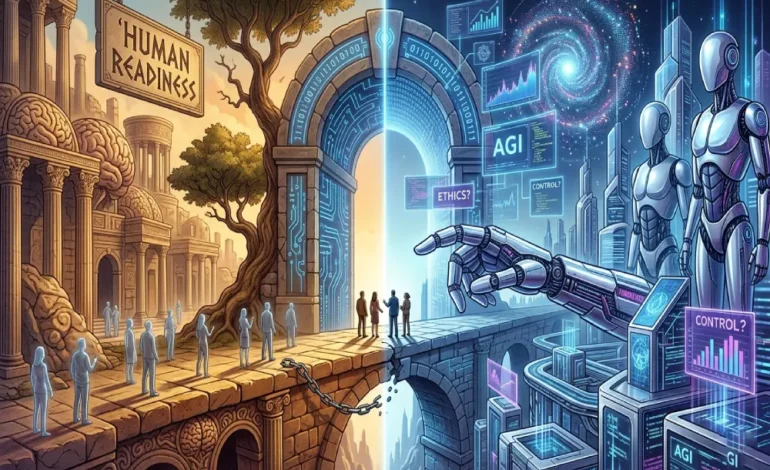
We see it everywhere. From the blueprints of a new skyscraper to the vacuum zipping across a living room floor, Artificial Intelligence (AI) is no longer a “future” concept it is the current reality. Yet, as we stand at this technological crossroads, a critical question arises that transcends code and silicon: Are we actually ready for AI, even if we have the knowledge and the tools?
To understand where we are going, we must look at the two distinct ways AI interacts with our existence: using AI in our work and AI using our work to lead us.
1. The Professional Pivot: AI in Civil Engineering and Beyond
In industries like civil engineering, AI has moved from a “luxury” to a “necessity.” Recent 2026 data shows that while only 27% of AEC (Architecture, Engineering, and Construction) firms were using AI in 2025, a staggering 94% of those firms plan to increase their investment this year.
We are seeing AI-enhanced Building Information Modelling (BIM) and generative design tools that can test hundreds of structural scenarios in minutes tasks that used to take human engineers weeks.
The Statistical Reality of the Workplace
- Efficiency Gains: Workers using AI tools report up to 66% higher throughput and save an average of 12 hours per week on routine tasks.
- The Skills Gap: Despite the benefits, there is a looming $5.5 trillion risk to companies by the end of 2026 due to skills gaps.
The Fear Factor: A recent 2026 survey revealed that 52% of workers remain concerned about AI’s impact on their job security, despite the fact that AI is projected to create 170 million new roles globally by 2030.
2. The Domestic Dilemma: The Robot in the Living Room
The psychological barrier: the “Mindset Issue.” We often say we want a robot to help at home, but when faced with the reality, our first thoughts aren’t about the freedom it provides. Instead, we think:
- “How much does it cost?”
- “Will it actually clean the dishes as well as I do?”
- “What if a child hits it or it breaks?”
This hesitation is reflected in the market. While the household robot market is projected to grow to $17.44 billion in 2026, the majority of adoption is still limited to “simple” tasks like vacuuming (38% market share) and lawn mowing (14%). We are comfortable with a disc that sucks up dust, but we are mentally hesitant to invite a humanoid robot into our intimate spaces.
3. The Mindset Gap: Fear vs. Lethargy
The most striking point in your reflection is the idea of “lethargy.” We often use fear as an excuse for inaction. We fear that AI will take over, yet many people remain “sleeping” believing that the true impact of AI is still a long way off.
“We need to understand that we don’t have to fear; we need to not be lethargic. Otherwise, we are not prepared for the future.” This lethargy is dangerous because the “future” arrived yesterday. In 2026, 50% of tech job postings now require AI fluency. Those who possess these skills are earning 28% more than those who don’t. To stay “asleep” is to fall behind an economic and professional curve that is moving at a 31% annual growth rate.
The Path Forward: Integration, Not Replacement
The transition to an AI-driven world isn’t just about buying a robot or downloading a new software suite. It’s about a psychological shift.
How to Prepare:
- Shift from Cost to Value: Stop asking what the technology costs and start asking what your time is worth.
- Move from Fear to Fluency: Don’t wait for AI to “arrive.” Start using it for small daily tasks—be it drafting emails or analysing project data.
- Human-Centric Design: Recognize that while AI can process data, it lacks high-stakes decision-making and emotional adaptability. In 2026, the most successful professionals are those who use AI to handle the “lethargic” data work, leaving the human to handle the “dynamic” strategy.
Conclusion
Whether it’s a robot doing our dishes or an algorithm designing our bridges, the technology is ready. The question is: Is our mindset? We cannot afford to be lethargic. The tools are in our hands; it’s time we learned how to lead with them, rather than being led by our fears.
What’s your next step? Will you continue to view AI as a “delicate body” that might break, or will you see it as the most powerful tool ever added to the human toolkit?
Quick Blog Summary Table:
| Aspect | 2026 Trend / Statistic | Potential Impact |
| AEC Sector (Construction) | 94% of AI adopters are increasing usage | Enhanced project accuracy and safety |
| Household Robotics | Projected market size: $17.44 Billion | Increasing reliance on autonomous chore systems |
| Efficiency Gains | Average save of 12 hours per week | Higher productivity and work-life balance |
| Upskilling Gap | $5.5 Trillion risk to global revenue | Urgent need for personal and corporate training |