
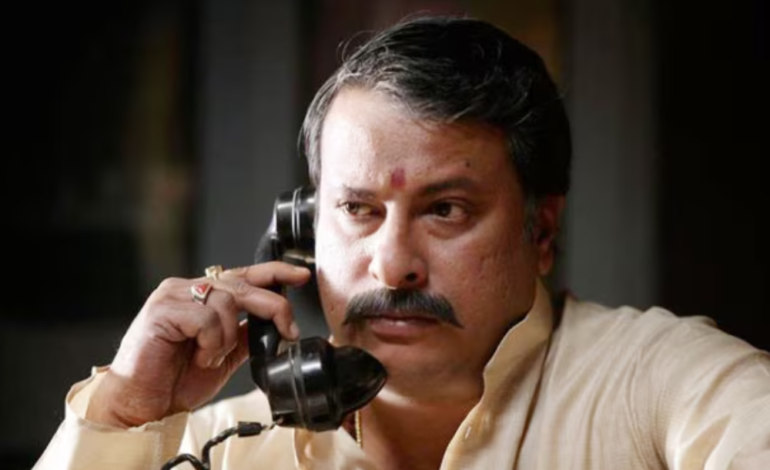
The Untold Leadership Lessons From Ramadhir Singh: Villain Or Prone-to-business Hero?

When we think of Bollywood villains, our minds instantly wander to the iconic, larger-than-life figures who dominated the silver screen for decades. We remember the menacing stares, the booming voices, and the theatrical cruelty. Characters played by legendary actors like Amrish Puri or the versatile roles of Anupam Kher have left an indelible mark on Indian cinema. They were the epitome of evil, designed explicitly to make us root for the hero.
But if we peel back the layers of modern cinematic storytelling, one character stands out completely separate from the rest. He doesn’t wear a flashy cape, he doesn’t have a dramatic catchphrase accompanied by maniacal laughter, and he doesn’t execute his henchmen over minor inconveniences.
That character is Ramadhir Singh from Anurag Kashyap’s masterpiece, Gangs of Wasseypur.
If you look closely at his character arc, his dialogues, and his philosophy, you begin to realize something profound: Ramadhir Singh wasn’t just a conventional villain. In many ways, he operated with the mind of a pragmatic leader, a strategist, and the true hero of his own structural empire.
Let’s break down the deep, practical messages and leadership qualities that make Ramadhir Singh one of the most fascinating and educational characters in Indian cinema.
1. The Ground Reality: “Jab Tak Cinema Rahega…”
One of the most famous sequences in the movie features Ramadhir Singh giving a masterclass on human psychology and societal distraction. His iconic dialogue perfectly captures why he managed to survive and rule while others fell:
“जब तक इस देश में सनेमा (सिनेमा) रहेगा, लोग चूतिया बनते रहेंगे।” (As long as there is cinema in this country, people will continue to be fooled.)
This isn’t just a funny line; it is a sharp, analytical observation of the people around him. Ramadhir explains the root cause of why his rivals and the general public fail to achieve real power.
- Living in a Fantasy World: He observes that everyone has a fictional narrative running in their heads. One person thinks he is Amitabh Bachchan, another acts like Salman Khan, and someone else envisions himself as Shah Rukh Khan.
- The Danger of Self-Delusion: People get so lost in these imaginary movie stories that they forget to look at the harsh realities of life. They stay trapped in their internal movies, unable to step out and look at the actual socio-economic ground they stand on.
- Staying Grounded: While his enemies were busy playing characters in their own heads, Ramadhir Singh remained completely grounded in reality. He didn’t buy into narratives; he bought into power, resources, and control.
For a general audience, this serves as a massive life lesson. True leadership requires looking at the world exactly as it is, without the filter of romanticized illusions or media-driven fantasies.
2. A Masterclass in Mentorship and Developing Leadership
A great leader doesn’t just manage; they cultivate future generations of leaders. Throughout his life, Ramadhir tried to pass down hard-hitting, practical wisdom to his subordinates and, most importantly, to his son.
Instead of letting his son wander aimlessly or engage in petty street fights, Ramadhir pushed him toward actual, meaningful work. He advised him to do something that modern management experts preach every day: Get your hands dirty on the field.
Developing the ‘Leader Quality’
Ramadhir explicitly tells his son to stop wasting time roaming around fruitlessly. Instead, he instructs him to go to the fields, stand among the workers, and give them motivation.
- Visibility and Presence: A leader cannot rule from a closed room or by merely wandering the streets as a tourist. You need to be where the actual work happens.
- Motivation over Mandate: By telling his son to motivate the people in the fields, he was teaching him the essence of human resource management—inspiring people to work rather than just threatening them.
- Stop Wandering, Start Leading: Ramadhir hated aimlessness. He believed that every action must have a purpose that builds toward structural authority.
3. The ‘Lean Approach’ to Human Resource Management
In traditional Bollywood movies, if a henchman fails to complete a task, the villain instantly pulls out a gun and shoots him on the spot. It looks dramatic, but from a logical and business perspective, it’s highly inefficient.
Ramadhir Singh brings a refreshing, highly practical “Lean Approach” to his operations.
Consider the famous comic yet deep sequence where he calls in one of his men. Ramadhir had given him a specific order to eliminate a target, and the man claims he successfully completed the job. Sensing dishonesty, Ramadhir doesn’t pull out a weapon. Instead, he delivers a sharp slap and demands the absolute truth.
Once the truth comes out, what does Ramadhir do? He doesn’t kill him.
- No Waste of Resources: Ramadhir understands that human capital, bullets, and time are valuable resources. Killing his own man over a blunder would mean losing a loyal worker and wasting ammunition.
- Correction over Destruction: By slapping him and demanding the truth, he corrects the behavior without destroying the asset.
- A Highly Efficient System: His entire management style relies on minimizing waste. He doesn’t let emotions or ego dictate his disciplinary actions. He keeps his operations running smoothly through calculated, measured reprimands.
4. Calculating Profit and Loss till the Very End
Perhaps the ultimate testament to Ramadhir Singh’s pragmatic mind is his final scene. When his fierce rival, Faizal Khan (played by Nawazuddin Siddiqui), stands directly in front of him with a gun, Ramadhir instantly reads the situation. He knows his time is up and that there is no escape.
In that high-stakes, life-or-death moment, an ordinary cinematic villain would beg, scream, or engage in a long, dramatic argument to save face. But what does Ramadhir do? He chooses absolute silence and compliance.
He evaluates the situation through the lens of profit and loss:
- What is the profit of arguing with a man holding a loaded gun? Zero.
- What is the loss? A loss of dignity and peace in his final moments.
Realizing that an argument yields absolutely no practical return on investment, he calmly accepts his fate. He doesn’t waste breath on useless words, maintaining his calculating, sharp persona until the very last second.
Summary of Ramadhir Singh’s Core Philosophies
| Leadership Quality | Cinematic Example | Practical Life Lesson |
| Grounded Pragmatism | “Jab tak cinema rahega…” monologue | Avoid self-delusion; see the world for what it truly is. |
| Field-Level Mentorship | Sending his son to motivate workers in the fields | True leadership is built on the ground, not through aimless wandering. |
| Resource Efficiency | Slapping his incompetent henchman instead of shooting him | Avoid emotional reactions; preserve your human capital and resources. |
| Strategic Calculation | Remaining calm and silent during his final confrontation | Never waste energy on arguments that yield no practical return. |
Conclusion: The Hero in a World of Chaos
When we look back at Gangs of Wasseypur, it is easy to get swept away by the aggressive machismo of the heroes who fight with guns and explosives. But the man who survived the longest, ruled the most effectively, and died with his pragmatism intact was Ramadhir Singh. His patience in the police station, his calm handling of volatile political situations, and his unique motivational style prove that he possessed exceptional leadership skills. He wasn’t a hero in the moral sense, but within the brutal reality of Wasseypur, he was the only true professional. He reminds us that in a world full of people lost in their own fictional movies, the person who stays grounded in reality is the one who ultimately leads.